I went to tour The United States Holocaust Memorial Museum in D.C and my first impressions of it was that it has an industrial presence as I think it wants to show what those experienced during the Holocaust by having a more industrial and old fashioned presence. The main theme of the museum is to commemorate and mourn the Holocaust while also trying to stop anti semitic talk as signs around and inside the museum were talking about stopping anti semitic messages and spreading awareness. I chose to visit the Holocaust museum because I’ve been interested in state structures and when I was going through the museum, I questioned more how this happened and what enabled the Holocaust. Was it because of the rise in antisemitism throughout Europe in the 19th and 20th centuries, or was it the legacy of Prussia and a militaristic society that enabled this? I’ve also been looking into high and low trust societies in my own time and I was wondering if the Holocaust was a consequence of a high trust society meaning that German society had high trust in the government. The museum is still very relevant today with antisemitism still widespread around the world and it still honors those that died during the Holocaust and those that made a difference in trying to save people during the time.
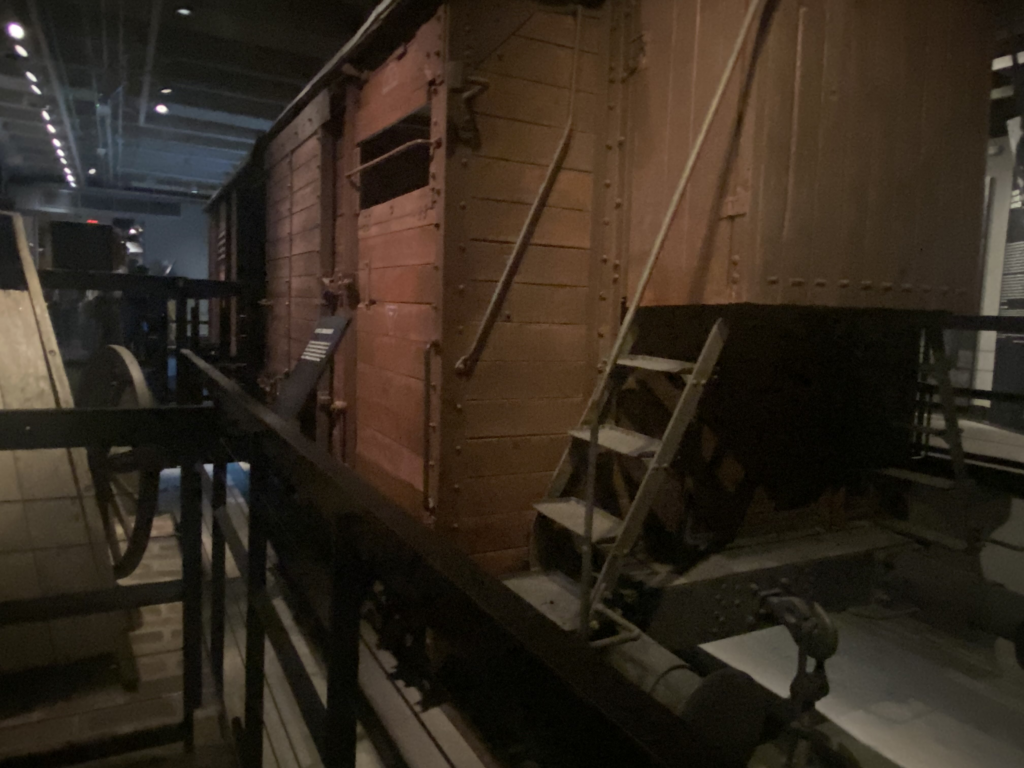
The purpose of the exhibit is to mourn the Holocaust and spread awareness. It does so by theming the museum after concentration camps back in Europe and bringing in artifacts used during the time. Another purpose of the museum is to stop the spread of antisemitism by trying to convince those that visit to not spread anti semitic messages and to be kind to one another. It uses the artifacts from Europe well by bringing in all sorts of things from Nazi uniforms, flags, and a train car used to carry people to the camps. It incorporates the artifacts nicely as the smaller ones are on display while you’re able to walk through larger ones. The museum focuses on the Jewish experience but it also talks about those that Nazi Germany persecuted such as political enemies, minorities, and other smaller groups. The museum mostly relies on storytelling rather than having the people there engage with the topic as most of the museum requires you to go through it slowly and read about events in the past.
The holocaust museum was built in 1993 and while they were able to establish some more modern ways to communicate their message for example, they had iPad with information about a village that was destroyed by the Nazis, the museum does a poor job at using modern technology with most of their information being written on the wall. They also had a few screens that would show clips of the holocaust and events before it but the museum is still behind in terms of using technology. However, I think the way they use their limited technology works in communicating their message as we are still able to get a glimpse at the destruction created by the Nazis and hearing and seeing things such as speeches and human suffering is enough to get their message across. I also assumed that one of the reasons they can’t modernize their equipment was the fact that tickets were free with a transaction fee of a dollar per ticket and ticket revenue or lack of is likely a reason why they can’t afford to modernize.
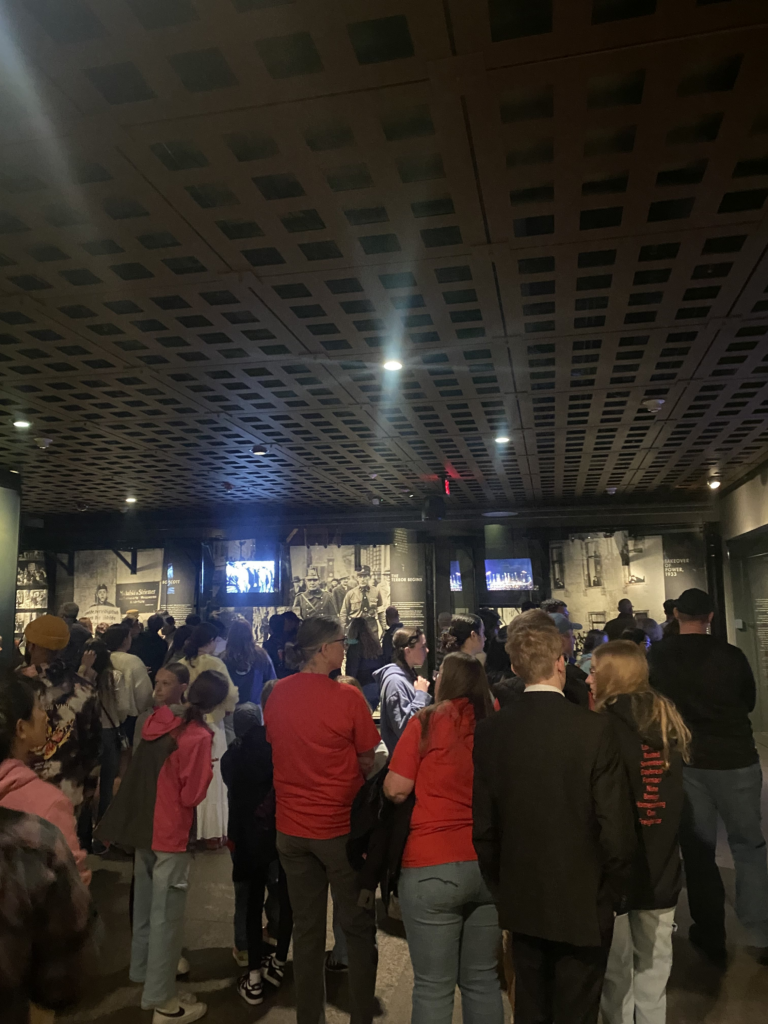
The museum does well at trying to be accessible to all as the ticket prices were almost nothing. When entering the museum, there are ramps and elevators for those with walking disabilities and signs in different languages. While on the walking tour however, most of the writing and films that were playing were in English. The museum is accessible to those of all ages however, I would recommend older kids and adults go rather than the whole family as most of what’s presented wouldn’t be understandable to younger kids and they would struggle to read and listen. I still think that most of the museum’s faults are because they must not get enough funding as the museum gets most of its funding from the federal government and private donations.
The exhibit is organized in a way that you’re meant to walk through and view the artifacts on display. The lights were dim and the halls were crowded. I went with my family and they pointed out that this could be intentional as to make you feel uncomfortable and anxious to give you an immersive effect. However, at the cost of a more immersive effect, it becomes harder to read the text that the museum wants you to read as most of it is hard to see in the dark. The museum does a good job at encouraging us to further examine the artifacts brought in by having many on display and allowing people to walk through bigger ones such as trains, barns, and gates. However, the smaller artifacts were off limits to visitors.
The Holocaust museum leaves a lasting impression by effectively showing off the horrors of the Holocaust. The museum is accessible to many as the tickets are only a dollar each. The museum effectively uses artifacts and is modeled to give an immersive effect when walking through. However, the museum falls behind in terms of technology by not being able to use virtual reality or digital maps and mainly relies on basic reading and short films. I would say that the museum was able to convey its message of stopping antisemitism effectively in spite of lacking digital tools and its message is still important today as antisemitism is very much a thing. I would recommend the museum to those that want to learn more about the Holocaust especially since it’s so cheap.
“Legal and Tax Status Information – United States Holocaust Memorial Museum.” Accessed March 21, 2025. https://www.ushmm.org/copyright-and-legal-information/legal-and-tax-status-information.